Posted On: 14 Jan, 2026
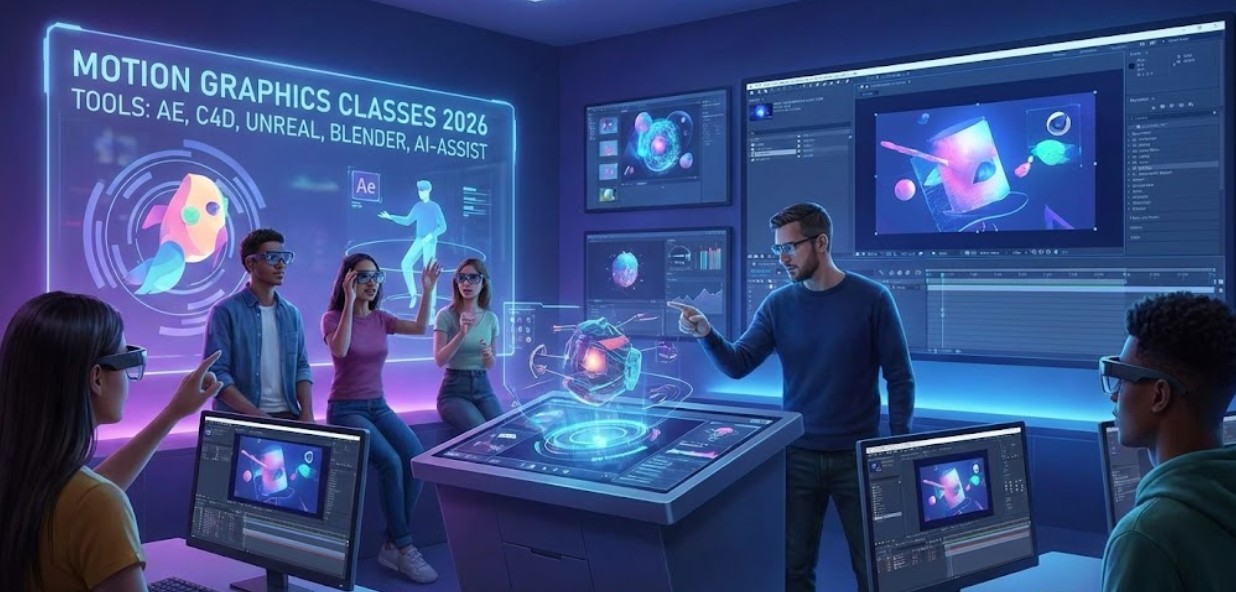
Motion Graphics Classes in 2026: Tools Every Designer Must Learn
The creative industry is moving fast, and motion graphics is right at the centre of that shift. Designers exploring Motion Graphics Classes in Kochi are no longer learning just animation techniques—they’re learning how visuals move, respond, and communicate across digital platforms. In 2026, motion graphics isn’t an add-on skill. It’s a core requirement for designers working with brands, apps, and digital content.
What’s changing isn’t just style. It’s the way motion graphics is created, consumed, and how it is supposed to work.
How Motion Graphics Is Evolving in 2026
Earlier, motion graphics lived mostly inside ads and title sequences. Today, it’s everywhere—Instagram reels, YouTube shorts, mobile apps, websites, OTT platforms, and product interfaces.
In 2026, three major shifts define the field:
- Short-form dominance: Attention spans are shorter. Motion needs to communicate faster.
- Brand consistency: Motion is now part of brand identity, not decoration.
- UI-based animation: Movement improves user experience, not just aesthetics.
Designers are expected to think beyond visuals and understand context, speed, and platform behaviour.
AI Is Reshaping the Motion Graphics Workflow
AI is no longer a future concept—it’s already changing how designers work.
Tools powered by AI now assist with background generation, object tracking, motion prediction, and even animation suggestions. Instead of replacing designers, AI speeds up repetitive tasks and frees time for creative decision-making.
In 2026, motion designers who understand AI-assisted workflows have a clear advantage. Knowing when to use AI and when to rely on manual creativity is becoming a valuable professional skill.
Short-Form Video Is Driving Demand
Brands are no longer focused only on long campaigns. They need daily, scroll-stopping visuals.
Motion graphics plays a key role in:
- Instagram Reels
- YouTube Shorts
- App launch teasasers
- Product explainers
- Social media ads
Designers must learn how to create fast, impactful animations that communicate ideas in seconds. Timing, transitions, and clarity matter more than complexity.
Branding and UI Animation Are Now Linked
Motion graphics and branding are no longer separate disciplines. Logos animate. Buttons respond. Screens transition smoothly. Motion helps users understand what’s clickable, important, or interactive. This is where motion design meets UI/UX.
Designers trained in Graphic Designing Courses in Kochi are increasingly expected to understand motion basics, making motion graphics a natural career extension rather than a separate field.
Core Tools Every Motion Designer Must Learn in 2026
While trends evolve, tools still matter. A strong foundation includes:
- Adobe After Effects for motion design and compositing
- Cinema 4D or Blender for 3D motion work
- Premiere Pro for timeline integration
- Figma + motion plugins for UI animation
- AI tools like Adobe Firefly and Runway for faster workflows
At Reliance Academy, training focuses not just on tools, but on why and when to use them—an approach that helps designers adapt as technology evolves.
Career Readiness Matters More Than Software
Knowing tools isn’t enough. Studios and agencies look for designers who can:
- Interpret briefs clearly
- Manage deadlines
- Maintain visual consistency
- Adapt styles across platforms
- Work with feedback professionally
This is where structured training makes a difference. Learning motion graphics within a realistic workflow prepares designers for real industry pressure, not just classroom projects.
Choosing the Right Learning Environment
The learning environment shapes creative confidence. The best institute for graphic design will not only teach animation but also thinking, problem-solving, and professional discipline.
Reliance Academy promotes learning where students are motivated to learn through exploring, failing, correcting, and refining their work by using mentorship and practical learning. This freedom versus order is essential to growth in the long term.
Why Motion Graphics Is a Future-Safe Skill
Motion graphics connect multiple industries—marketing, entertainment, tech, education, and startups. Designers who combine motion with branding and UI thinking are especially in demand.
As platforms change, motion remains relevant because movement helps humans understand information faster than static visuals.
This is why many creative learners see motion graphics as a long-term career investment rather than a trend.
Conclusion
Motion graphics in 2026 is about more than animation—it’s about communication, experience, and adaptability. The future of the industry will see designers who are familiar with tools, platforms, and creative intent remain timeless. Motion graphics is a skill which increases with your career with the right direction and exposure. It is the philosophy of learning as practiced at Reliance Academy, where learners are taught to think outside the box of software and be ready to work in real, creative positions.
FAQ
1. Are motion graphics classes worth learning in 2026?
Motion graphics is becoming essential across branding, advertising, UI design, and digital content. As video-first platforms grow, skilled motion designers are seeing stronger demand, better pay, and more flexible career options.
2. What tools are essential for motion graphics designers in 2026?
Designers should be comfortable with Adobe After Effects, Blender, Cinema 4D, and AI-powered tools like Adobe Firefly and Runway. These tools help speed up workflows while improving creative output and production quality.
3. Can beginners join motion graphics classes in 2026?
Absolutely. Most motion graphics classes start with design basics, animation principles, and simple tools before moving into advanced techniques. Beginners who are curious and consistent can confidently build skills from scratch.
4. Are motion graphics classes available in Kochi?
Yes. Kochi is one of the emerging creative education centres with motion graphics programs that integrate design basics, animation training and real world exposure to the prevailing industry demands.
5. What career opportunities are available after learning motion graphics?
Motion graphics creates opportunities in advertising, branding firms, UI/UX, media firms, film production, and freelancing. Designers have the opportunity to work on commercials, applications, social media campaigns, etc.
Related Blogs



11 May, 2026
16 Jul, 2026